

The quick answer
Bed bugs are flat, reddish-brown insects with no wings, about 5 mm long, close to the size of an apple seed. They feed on blood at night and hide near the bed. A bite on its own is not enough proof. You confirm them when you find the insect, black dots or shed skins in the mattress seams and the cracks of the bed. Hot washing, vacuuming and a mattress encasement bring the numbers down, but an infestation that has spread into furniture and cracks will usually need treatment in stages.
In this article
- What bed bugs look like at each stage
- The bed bug life cycle and why they come back after spraying
- Bed bug bites: what they look like and how to tell them apart
- Signs of bed bugs in your home
- Check your room with a flashlight, step by step
- Wrong information about bed bugs
- Where did the bed bugs come from?
- Insects people confuse with bed bugs
- Are bed bugs dangerous? And when should you see a doctor?
- Getting rid of bed bugs: what works at home
- A 3-week plan for a small infestation
- Bed bugs with children and older people
- If you live in a building or rent your apartment
- Natural methods and sprays: what doesn’t work
- When should you call a pest control company?
- After travel or buying secondhand furniture
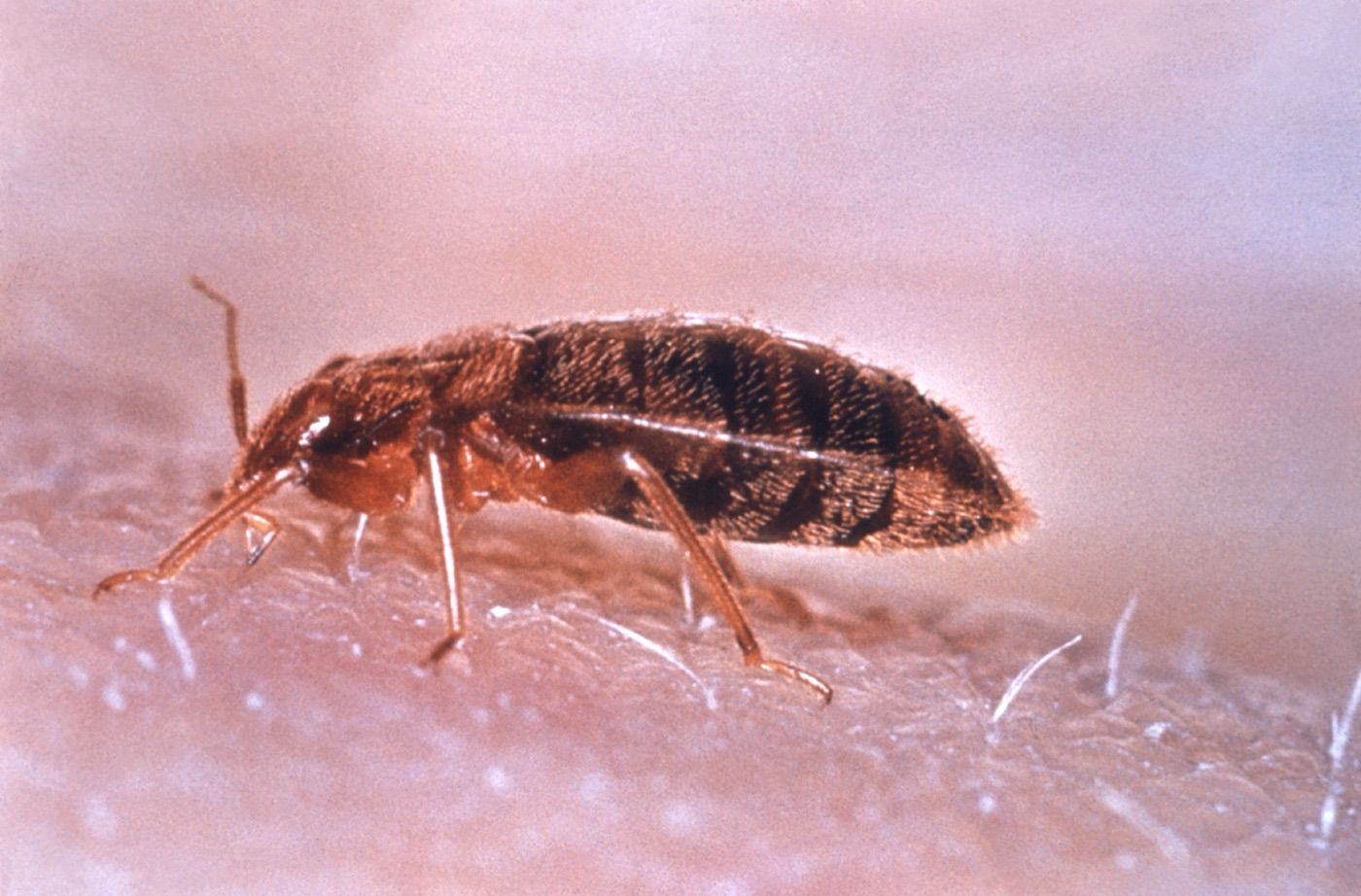
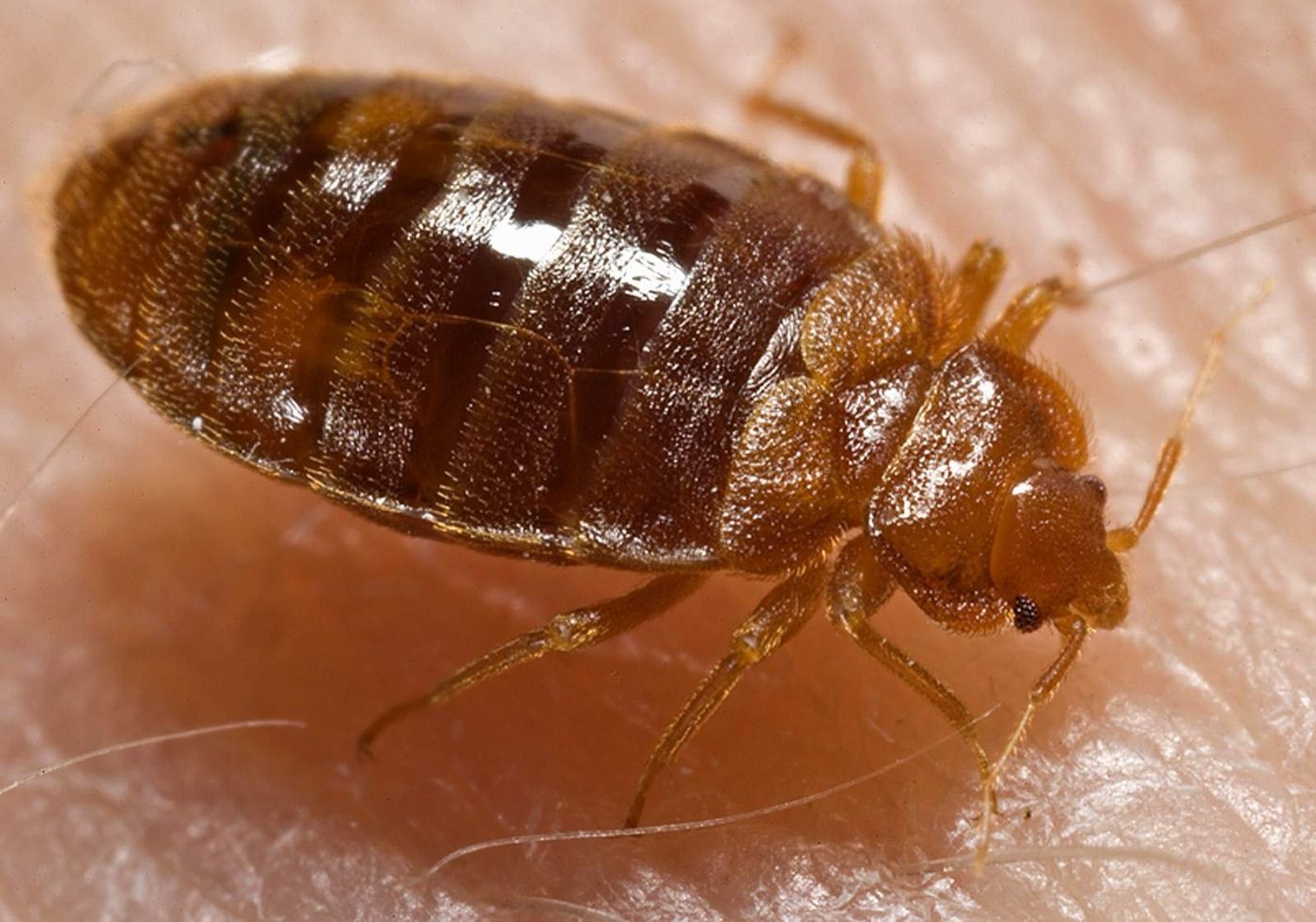
What bed bugs look like at each stage
Plenty of people search for pictures of bed bugs and come away confused, because a bed bug’s appearance changes with its age and with how recently it fed. The insect on the edge of your mattress could be a tiny pale speck, or it could be a swollen brown bead.
The egg
A bed bug egg is white and about 1 mm long, so think of a very small grain. A sticky coating holds it in place, which means a quick wipe or a shake of the sheet won’t remove it. You will usually find eggs in a crack or a seam rather than on an open surface. Because they are so small and pale, you may need a flashlight and a magnifying glass to see them.
The nymph
A nymph is a young bed bug that hasn’t finished growing. It starts at about 1 mm long and is paler than an adult, somewhere between yellow and white. If it has just fed, you may see the dark color of blood inside its body. A bed bug goes through five stages before it becomes an adult, and each stage needs at least one blood meal before it can shed its skin and move on to the next.
The adult bed bug
An adult is about 5 mm long, with a flat oval body like an apple seed. It is reddish brown and has no wings. That flat body lets it slip into a crack as thin as the edge of a bank card. According to the CDC, bed bugs range from 1 mm to 7 mm long depending on their age.
Before and after feeding
A hungry bed bug looks thin and flat. After a meal its body gets longer and swollen, and its color darkens. It can take in up to 6 times its own weight in a single meal that lasts 3 to 10 minutes. That is why many people say they have two kinds of insect when they are looking at the same insect at two different times.
The bed bug life cycle and why they come back after spraying
Eggs are the biggest reason people feel let down after spraying. A spray can cut down what you can see, then a few weeks later you find new bites and decide the insecticide didn’t work. Sometimes that is exactly what happened. Other times you are looking at a new batch that hatched from eggs the treatment never reached.
These numbers make the picture clearer. They come from the University of California’s pest management program:
| Stage | Time or number |
|---|---|
| Eggs hatching | About 10 to 15 days at room temperature |
| Egg to adult | 5 weeks to 4 months |
| Eggs a female lays in her lifetime | 200 to 500 |
| Eggs per day | 2 to 5 |
| Adult lifespan | Can be a year or more |
| Generations per year | Up to 4 |
| Feeding | About every 5 to 7 days |
| Surviving without food | 20 to more than 400 days |
So a one-day treatment with no follow-up can leave eggs that hatch two weeks later. Any serious treatment plan has to account for what will emerge after the visit as well as what you can see today.
The long fasting explains something else. People lock up the apartment for a month, expecting the bed bugs to starve, and come back to find them still there. The length of time depends on temperature and humidity, but the number is big enough that locking up alone is no sure fix.
Can bed bugs fly?
No. Bed bugs have no wings, and they don’t jump either. They get around by walking, and they can cover more than 30 meters in one night, though they usually stay within about two meters of where you sleep. If the insect you have flies, look for something else. If it jumps, it is more likely to be fleas.
Bed bug bites: what they look like and how to tell them apart
A bed bug bite is usually an itchy red bump, very close to a mosquito or flea bite. Bites can be scattered, or they can come in a straight line or small clusters. They tend to show up on skin left uncovered during sleep, such as the arms, neck, face and legs.
While biting, a bed bug injects a numbing substance along with another one that stops blood from clotting, so you don’t feel it at the time. That is why you wake up to bites with no memory of anything happening during the night.
Why does one person in the bed get bitten and the other doesn’t?
The bug isn’t necessarily biting only one of you. The difference usually lies in how each body reacts. Most people see a mark within a day or a few days, in some people it can take up to 14 days, and some may show no clear mark at all. So if your partner’s skin is clear, that does not prove the bed is clean.
Table: bed bugs, mosquitoes, fleas or bird mites?
This table gets you closer to an answer, but it won’t settle the question by itself. A sure identification comes from the insect itself or the signs it leaves in the room.
| Compare | Bed bugs | Mosquitoes | Fleas | Bird mites |
|---|---|---|---|---|
| What do you see? | Itchy bumps, sometimes in a line | A swollen red bump | A red dot with a halo around it | Small itchy bumps |
| When? | You discover them in the morning | While you sit or sleep | All day | Usually at night |
| Other clue | Black dots and shed skins in the bed | Buzzing and standing water nearby | A pet or a carpet, and the insect jumps | A bird nest nearby |
| How to confirm? | Flashlight along the mattress seam | Check water sources and where you sleep | A white sock where the pet rests | Look for the nest |
Not all itching comes from insects, either. If you have looked carefully and found no sign, or the bumps look different or keep increasing, see a dermatologist before you spray the house. That step saves you money and insecticide you don’t need.
When do bed bug bites go away?
According to Mayo Clinic, bites usually go away on their own within a week or two. Here again we won’t recommend medicines or creams, because that is the job of a doctor or pharmacist, especially with children and pregnant women.
Signs of bed bugs in your home
These signs count for more than the bite itself. If you find one of them, carry on with the check in the next section. If you find two or more in the same spot, the odds are very high.
- Black or dark brown dots: these are bed bug droppings. You find them on mattress seams and the wood around the bed, sometimes in a small line. Wipe one with damp cotton and it will leave a dark smear.
- Small blood spots on the sheet: red or rust colored. They appear when a full bed bug gets crushed as you turn over.
- Pale shed skins: the skin a bed bug leaves behind each time it molts. They look like the bug itself, only empty and see-through.
- Small white eggs: you need a flashlight and a patient eye. They stick inside cracks.
- The insect itself: seeing one is the strongest proof. If you start seeing them often in the daytime, their numbers may have grown.
- A distinct smell: with a large infestation you may notice a sweet, musty smell in the room. If you smell nothing, that doesn’t mean you have no bed bugs.
Check your room with a flashlight, step by step
About 85% of bed bugs are in or near the bed, according to the University of California. So start there, and don’t spread your effort over the whole home on the first pass. Pick a time when you can concentrate, and work in strong light rather than a dark room.
Get a strong flashlight, an old plastic card and some sticky tape, plus a magnifying glass if you have one. Then go in this order:
- Take the sheets off gently. Roll them inward without shaking them and keep them in a sealed bag until you wash them. Look at the mattress before you move it.
- Mattress seams. Run the flashlight along all the stitching on both sides. Slide the edge of the card into the fold to bring out anything hiding there.
- Under the mattress and the bed base. Lift the mattress and look at the wood, the corners of the base and the screws that hold it together.
- Headboard. If you can, pull it away from the wall and look behind it, especially at the joints and any crack in the wood.
- Nightstand and nearby wardrobe. Pull out the drawers and look inside and underneath them.
- Baseboards and wallpaper. Follow the edge between the baseboard and the floor, and any spot where the wallpaper is lifting.
- Sofas and armchairs. These matter most if someone often sleeps or sits on them at night. Check the fabric folds and the cushions.
- Anything touching the bed. Power outlets, picture frames, nearby curtains. Don’t take an outlet apart yourself. Just look from the outside.
If you find an insect and aren’t sure what it is, stick it to the tape, take a close photo and keep it in a sealed bag. That photo saves a lot of time when you talk to a specialist.
Another method if you found nothing
Checking by eye can miss a small number of bed bugs. Cup traps placed under the bed legs catch bed bugs as they climb up or down, and a study cited by the University of California found they caught about 6 times as many as a visual check alone. If things are still unclear, you can use them and look at them every week. After washing and treatment, they also help you track the result.
Wrong information about bed bugs
Bad information here costs you money and nerves. It can have you treating something that isn’t there, or leaving alone something that is. These are the things people say most:
| What people say | The truth |
|---|---|
| Bed bugs mean the home is dirty | Bed bugs travel in luggage and furniture, and the CDC says cleanliness does not determine whether you get them |
| You can’t see bed bugs with the naked eye | Adults are visible, about the size of an apple seed. Young ones and eggs are what need a flashlight |
| No bites means no bed bugs | Some people show no clear mark, or the mark can be delayed by up to 14 days |
| Bed bugs live only in the mattress | They also hide in bed cracks, baseboards, sofas and nearby wardrobes |
| Lock the apartment for a month and they die | They can live for months without food, depending on temperature and humidity |
| One spray is enough | Eggs take about 10 to 15 days to hatch, so you usually need follow-up |
| We have to throw out all the furniture | In most cases treatment costs less and works better, and throwing things out at random can spread the bugs |
You will also hear that bed bugs only come out at night. They do prefer the night, but if someone sleeps during the day or the infestation is large, you may see them at other times. So spotting one in daylight does not mean it is some other insect.
Where did the bed bugs come from?
Most people’s first thought is that they have been careless about cleaning, and that is wrong. The US Centers for Disease Control says plainly that bed bugs can turn up anywhere, even in five-star hotels, and that cleanliness isn’t what decides whether they are there. A clean room is easier to check and has fewer hiding places, but it won’t stop a bed bug that came in inside a suitcase.
The most common ways in:
- Luggage and clothes after a stay somewhere that has bed bugs.
- Secondhand furniture, especially beds, mattresses and sofas.
- Neighbors, because bed bugs can move through a building along cracks and around pipes.
- The clothes or bag of a visitor coming from an infested place.
- Shared sleeping quarters such as dormitories.
If you live in a building and find bed bugs, it is a good idea to have a calm talk with the neighbors on the other side of your walls. If more than one apartment has them and each one treats alone at a different time, the problem can keep circling between apartments.
Insects people confuse with bed bugs
Before you pay for treatment, make sure the insect really is a bed bug. These get mixed up with it most often:
- Carpet beetles: the adult is small and round, and the larva is hairy. They eat wool and natural fibers and don’t feed on blood.
- Fleas: smaller, with a body flattened from side to side. They jump fast and are usually near the spot where a pet rests.
- Bird mites: much smaller. They look like moving dots and are usually linked to a bird nest nearby.
- Young cockroaches: brown and quick, and you find them in the kitchen and bathroom more than in the bed. See cockroach control.
- Woodworm: some people call it “wood bugs.” The sign is small holes and fine sawdust in wood, with no bites. See our woodworm service.
If your insect is very small and not in the bed, go to our guide to tiny insects at home. It has a table sorted by place and appearance.
Are bed bugs dangerous? And when should you see a doctor?
According to the CDC, bed bugs are not known to spread disease to people. That doesn’t make them easy to live with. The itching can be severe, the worry and lost sleep affect the whole household, and some people become afraid to sleep in their own bed. That is a real problem, and it deserves a solution.
Ask a doctor for advice if:
- You have many bites, or the bites have blisters.
- The skin has become hot or painful or is oozing, because heavy scratching can break the skin.
- You have a clear allergic reaction, or the bites are on a small child.
Go to the emergency room right away if you get swelling in the face or throat, difficulty breathing or severe dizziness after a bite. The CDC says severe allergic reactions are rare, but when one happens you can’t wait.
Getting rid of bed bugs: what works at home
These steps come from US Environmental Protection Agency and University of California guidance. With a small, contained infestation they can make a big difference. With a large one they cut the numbers and get the room ready for treatment.
1. Stop the spread first
Don’t carry clothes and sheets uncovered from room to room. Put them in sealed bags right where they are and take them to the washing machine that way. Don’t change where you sleep or move furniture around, because you could carry bed bugs with you into a clean room.
2. Washing and drying
Wash sheets and any clothes kept near the bed in hot water at about 49°C, if the fabric can take it. Then put them in the dryer on its highest heat for at least 10 to 15 minutes. If you have no dryer, hot water alone is not as reliable, so you could use a laundry shop, then check again afterward.
3. The vacuum
Use the narrow nozzle on seams, baseboards, cracks and sofas. Go slowly and repeat the job, because one pass rarely removes all the bugs and eggs. After each session, seal the vacuum bag well and take it out of the home right away.
4. Mattress encasement
A special encasement closed with a tight zipper traps bed bugs inside the mattress, where they die over time without food, and it makes any new bed bugs easier to spot. Leave it on the mattress and don’t keep opening it. A regular cover for keeping a mattress clean is not the same as one made for bed bugs.
5. Steam
Steam can kill all stages if it reaches the bed bugs at a high enough temperature, about 54°C or more. Use a machine with low air pressure so the bugs don’t get blown away from the spot. Take care around electricity, wood and delicate fabrics.
6. Freezing and bags
Small items you can’t wash can go in a sealed bag in the freezer at minus 18°C for 3 days. Check the freezer temperature with a thermometer, because not all home freezers get that cold. Some items can also stay in a sealed bag for a long time if you aren’t going to treat them now.
7. Reduce hiding places
Clear the clutter under the bed, move the bed a little away from the wall and keep the sheets from touching the floor. Cracks in wood or walls can be sealed with silicone. These are simple jobs, but every hiding place you remove is one you won’t have to search later.
8. Check every week
The EPA says to check at least every 7 days and to keep an eye on the area for up to a year after you finish. Write down where and when you find bed bugs, because that will make a big difference if you need help later.
A 3-week plan for a small infestation
If the bed bugs are confined to one bed or one room, this plan puts the steps above in order. We based the timing on eggs taking about 10 to 15 days to hatch and on the advice to check every 7 days. The plan is no guarantee of a result, so if you find they have spread at any stage, don’t carry on alone.
Day 1: Find and contain. Check the bed and nearby furniture with a flashlight, photograph what you find and write down where it was. Seal the sheets and nearby clothes in bags, and don’t carry them uncovered through the home.
Day 2: Wash and clean. Wash and dry at the highest heat the fabric can take. Vacuum the seams, the bed and the baseboards, and throw the bag outside. If you have a suitable steamer, use it on seams and cracks.
Day 3: Seal and separate. Put on the mattress encasement, move the bed away from the wall and place cup traps under the legs. Remove the clutter under the bed once you have checked it.
Day 7: First check. Look at the same places, check the traps and vacuum again. Write down what you found next to what you found on day 1.
Day 14: The check that matters most. This is close to when the eggs hatch. If you find small nymphs, that is to be expected if you missed some eggs. Repeat the steps in those exact spots.
Day 21: Decide. If there are no new signs, keep checking every week for a while. If you still find bed bugs or new dots, or they have spread to another room, it is time to call a specialist.
How do you know the bed bugs are gone?
Bites alone are a poor measure, because the reaction can be delayed and old bites take their time to fade. Old black dots can stay in the wood after the bed bugs die, so clean them off well and any new dot will stand out. A stronger sign is empty traps and no new insects or shed skins for several weeks in a row. The EPA advises you to keep checking the area for up to a year, because a small number can slip by without your noticing.
Bed bugs with children and older people
Having a young child changes how you handle this, especially with any chemical product. If the bites are on a child or a baby, ask the pediatrician about the skin and don’t put anything on it on your own. Check the crib the same way you check your own bed: the joints, under the mattress and the rails.
Don’t spray any insecticide on a child’s bed, mattress or toys. Washing, vacuuming and covers are the foundation here, and any chemical treatment should be done by a specialist who knows there is a child in the home. Trimming a child’s nails may reduce scratching problems, and the doctor is the one to decide if the skin needs treatment.
With older people or anyone who has trouble moving around, keep in mind that sleep and skin are affected more, and they may not be able to describe the bites clearly. If someone at home can’t be moved easily, tell the company from the start so you can agree on how the work will go. This is no small detail, because the room may need to be empty during treatment.
If you live in a building or rent your apartment
Bed bugs in apartment buildings are a special case, because they can move from one apartment to another through cracks and openings. If you treat your apartment and your neighbor doesn’t, the problem may come back and you will think the treatment failed.
Talk to the neighbors next to you and tell them the signs. There is no need to make a fuss or accuse anyone, because nobody knows where the bed bugs started anyway. If more than one apartment has the same problem, try to treat during the same period. That can cost less and work better for everyone.
If you rent, tell the owner early and photograph the signs. The EPA points out that a landlord may have a role in treatment, and this varies with the law and the lease. Before you move out of an apartment with bed bugs, check your bags and furniture carefully. The worst outcome is carrying the problem with you to a new home.
Natural methods and sprays: what doesn’t work
Getting rid of bed bugs naturally is one of the things people search for most, and that makes sense. Nobody wants insecticide next to their bed. But we will be frank: these methods are not all equal, and some are dangerous.
Oils and scents
A Rutgers University study tested 11 natural products, and only two of them worked when sprayed directly on bed bugs. The trouble in a real home is that bed bugs hide where a spray won’t reach. So the one that dies in front of you tells you nothing about the ones hiding inside the bed.
Alcohol, kerosene and gasoline
Don’t use any of them. The EPA warns against them outright because they catch fire easily and can hurt you. A mattress soaked in alcohol next to a power outlet solves nothing, and it is a fire risk. Kerosene also leaves a smell that lingers, and it is bad for your chest.
Foggers (bug bombs)
Ohio State University tested 3 types on bed bugs and found very little effect or none. The mist doesn’t get into the cracks where bed bugs hide. Some of these products, used wrongly, can cause a fire or an explosion or harm the people at home.
Regular spray
Spray kills what it touches, and the bed bugs in hiding survive. The University of California generally doesn’t recommend bed bug products bought without a specialist involved, because how they perform in homes is not well enough known. Insecticides also usually shouldn’t go on mattresses and sheets unless the label allows it.
Heating the room or using powders
Don’t try to raise the room temperature with a heater or a gas stove. That won’t get every spot to the temperature needed, and it can start a fire. Professional heat treatment for whole spaces uses dedicated equipment and temperature measurement. And don’t scatter pool-grade or food-grade diatomaceous earth around the home, because breathing it in can harm you.
Do I have to throw out the mattress?
In most cases, no. Bed bugs are also in the bed frame, the cracks and the furniture, so if you throw out the mattress without treatment, the new one will get infested too. If you decide to get rid of it because it is old or torn, wrap it in plastic before you take it out of the room so you don’t spread bed bugs on the stairs, and write on it that it has bed bugs so nobody picks it up.
When should you call a pest control company?
Not every case needs a company on day one. But think about getting help if:
- You found bed bugs in more than one room, or in sofas and wardrobes.
- You washed, cleaned and checked, and two weeks later you found new signs.
- New bites are appearing on people at home, or someone has a severe allergy.
- You live in a building and the neighbors have the same problem.
- There are children or an older person at home, and you don’t want to try products yourself.
With the Elrwad bed bug treatment service, we first ask you by phone about the rooms and where people sleep, then tell you the price, the time and what to prepare. The technician then treats mattresses with heat, applies insecticide in the cracks of the bed, baseboards and furniture, and writes the product name and how long to stay out on the receipt. We also set a follow-up date with you because of the eggs. If you want to understand what affects the cost of treatment, here is our apartment pest control cost guide.
After travel or buying secondhand furniture
Keeping bed bugs out is far easier than treating them, and the steps are simple:
- At a hotel: put your bag on a rack rather than on the bed, and check the mattress seams and headboard with a flashlight before you unpack your clothes.
- When you get home: don’t take the bag straight to the bedroom. Open it in an empty area with no carpet and check its seams.
- Clothes: put them straight in the washing machine if the fabric can take it, and dry them on high heat.
- Secondhand furniture: check it with a flashlight before it comes into the home, especially beds and sofas. If you can’t check a piece, think twice before you buy it.
- Cup traps: if you travel a lot or have many visitors, they can sit under the bed legs as a simple warning system.
Frequently asked questions
How do I know if I have bed bugs?
Check the mattress seams and the cracks of the bed with a flashlight. If you find a flat brown insect, small black dots or pale shed skins, there is a good chance you have them. Bites alone are not enough, because many other bites look the same.
What really kills bed bugs?
High heat kills bed bugs and their eggs when it reaches them, whether from hot washing, a dryer or steam. The right insecticide in the cracks helps too. All of this has to get to the places they hide, and it has to be repeated depending on your situation.
Why do bed bugs show up in the first place?
They travel with luggage, clothes and secondhand furniture, and they can walk from one apartment to another. Having them has nothing to do with how clean your home is. Even big hotels get them.
Are bed bugs dangerous?
So far they are not known to spread disease to people. The trouble they cause is itching, lost sleep and anxiety, and sometimes an allergy. Swelling in the face or difficulty breathing is an emergency, so go to a hospital right away.
Is there a smell bed bugs hate that will drive them out?
We have not found a reliable source showing that any smell drives them out of a home. Oils may kill the ones they touch directly, but they won't reach all the ones in hiding, so don't rely on them alone.
Will a household spray finish them off?
It kills the ones it touches, and most bed bugs are hiding out of its reach. Many sprays show no clear result in homes, especially with a large infestation. And don't spray them on the mattress or sheets.
Do bed bugs fly or jump?
No. Bed bugs have no wings and they don't jump. They walk, and they can cover a long distance in one night. If the insect jumps, it is probably a flea.
How long can bed bugs live without food?
Anywhere from about 20 days to more than 400 days, depending on temperature and humidity. That is why locking up the apartment for a few weeks is not a sure fix.
About this article
Written by the Elrwad Pest Control team, using the sources below. This is general information. It does not replace a doctor if you have symptoms, or the instructions on any product label.